

SMSF Success in 2026: Compliance Meets Investment
Setting clear SMSF goals for 2026 is more than ticking compliance boxes — it’s about creating a roadmap for smarter investment decisions, without unnecessary fees. A well-planned SMSF aligns strategy, regulation, and growth opportunities, ensuring your fund is positioned to deliver on its ultimate purpose: a secure retirement.
Start with a Plan
Every successful SMSF begins with clarity. What are your financial objectives for the coming year? How do these goals fit with your long-term retirement strategy? Trustees who take time to define both compliance and investment priorities are far better placed to make decisions that serve the fund — and themselves — well into the future.
A robust investment strategy doesn’t just guide where your fund’s money goes; it demonstrates to auditors and regulators that every decision is made with prudence, foresight, and a clear focus on retirement outcomes.
Compliance as the Foundation
In SMSF terms, compliance isn’t just a checklist — it’s the framework that protects your retirement savings. Every investment must meet the sole-purpose test, adhere to arm’s-length rules, and remain within in-house and related-party limits.
Ignoring these fundamentals isn’t a small oversight; it can expose your fund to penalties, lost tax concessions, and even non-compliance. Conversely, embedding compliance into your planning gives trustees the confidence to explore investment opportunities without putting the fund at risk.
Smarter Investment Decisions
With compliance firmly in place, trustees can focus on what really drives SMSF success: strategic investments that balance risk, return, and liquidity. Whether it’s property, shares, or managed funds, every decision should be supported by a clear rationale and documented in the investment strategy.
Practical steps include:
- Reviewing and updating your investment strategy for 2026
- Conducting regular risk assessments and cash-flow planning
- Seeking independent valuations and expert advice where required
- Keeping a clear audit trail of decisions, minutes, and supporting documents
This disciplined approach ensures your fund is not only compliant but also positioned to grow sustainably.
The Importance of Review
Goals aren’t set-and-forget. SMSF trustees who actively monitor and adjust their fund throughout the year reduce the likelihood of surprises at audit time. Regular reviews allow you to respond to market changes, rebalance your portfolio, and seize opportunities — all while remaining within the regulatory framework.
Looking Ahead to 2026
Success in your SMSF isn’t measured by ticking boxes or chasing short-term gains. It’s about creating a fund that is compliant, strategic, and resilient, capable of weathering market shifts while staying true to your retirement objectives.
As 2026 approaches, take the time to align your compliance obligations with your investment ambitions. The result? A fund that works smarter, not harder, and a retirement you can look forward to with confidence.
At Saul SMSF, we understand that setting goals and staying compliant can feel complex — but it doesn’t have to be. Our team works alongside trustees and advisers to simplify decisions, provide clarity, and ensure your SMSF is positioned for both compliance and growth.
Together, we make sure your fund isn’t just meeting obligations — it’s working smarter for your retirement.
Your SMSF Reputation Is Only as Good as Your SMSF Auditor
A Boardroom Moment I Will Never Forget
As Managing Director of Saul SMSF, the best compliment I’ve ever received didn’t sound like a compliment at all.
Each year we meet with our referral partners, present our Annual SMSF Audit Review, and walk their directors through the year’s results — the strengths, weaknesses and emerging risks.
But on this particular day, the energy in the room shifted the moment our report hit the boardroom table. The Chair’s eyes narrowed. One Business Services Director — Steve — visibly sank into his seat. Others glanced at each other with quiet pride, knowing their SMSFs had passed cleanly.
Then came that familiar, heavy boardroom silence.
Suddenly the Chair boomed across the table:
“Hey Steve… all of our SMSFs in breach — they’re your clients, weren’t they?”
Steve hesitated.
“…yes, Chair…”
The Chair didn’t wait.
“And these are the same clients who pay late and argue fees?”
Steve swallowed. “You might be right…”
Then the hammer dropped:
“These clients have been a problem for years.
Sack them — or clean them up.”
Silence.
Embarrassment.
A very clear message.
At the end of the meeting, the Chair shook my hand and said:
“David, a good SMSF auditor is brand protection. That’s why you’re here.”
That moment captured a truth many firms overlook:
**Your SMSF auditor reflects your brand.
Choose well, and your reputation strengthens.
Choose poorly, and your reputation bleeds.**
- Why Quality, Independence and Communication Matter More Than Ever
Today’s trustees expect more than a checkbox audit. They expect:
- speed
- digital capability
- independence
- deep technical expertise
- modern systems
- advanced risk detection
But there’s another differentiator most firms underestimate:
Great auditors are exceptional communicators.
The right SMSF audit partner knows how to:
- read the room
- communicate clearly and early
- protect your client relationships
- use technology for transparency, not complexity
- stand beside you when issues get tough
Clear communication protects relationships.
Strong communication protects brands.
This is where reputable SMSF audit firms stand apart.
- Benefits for Referral Firms
When you refer an SMSF client, their audit experience becomes part of your reputation. A strong audit partner strengthens that reputation in five key ways:
- a) A superior, technology-enabled client experience
Saul SMSF’s digital audit model delivers:
- quick turnaround (typically 3–5 days)
- fewer delays
- fewer errors
- clean, transparent communication
A seamless audit gives your clients greater confidence in your firm.
- b) Fewer escalations and fewer reputational headaches
Poor audits produce:
- unnecessary contraventions
- frustration
- fee disputes
- loss of trust
A strong audit partner keeps these problems off your desk.
- c) Independence you can rely on
We do not provide SMSF admin, tax or advice — full stop.
Our APES 110–aligned model protects:
- governance
- integrity
- separation of duties
- your client relationships
- d) Enhancing — not competing with — your value
A reputable SMSF auditor strengthens your role through:
- early communication
- transparent management letters
- guidance on emerging risks
- absolute respect for your client relationships
- e) Future-proofing your firm’s brand
The SMSF landscape is changing faster than ever:
- ATO’s AI oversight
- crypto and digital assets
- Division 296
- valuation and trustee risk
- expectations for speed and technological sophistication
A future-ready audit partner protects your firm as the sector accelerates toward 2030.
- What to Look for in a Future-Focused Audit Partner
To genuinely protect your brand, ensure your auditor has:
✔ genuine SMSF specialisation
✔ technology-powered systems
✔ capability with complex assets
✔ stable, fast turnaround
✔ clean and proactive communication
✔ data security (ISO-aligned controls)
✔ a partnership mindset
✔ a culture of innovation
- Technology Is Now Non-Negotiable
The SMSF sector has entered the era of:
- AI-based ATO monitoring
- digital assets
- sophisticated data matching
- heightened valuation scrutiny
- increasingly tech-savvy trustees
Auditors must now:
- harness technology
- automate intelligently
- test accurately
- reconcile data quickly
- identify risk early
At Saul SMSF, this is our default position — not an ambition.
- The Real-World Benefits for Your Firm
A strong SMSF audit partner delivers:
- happier clients
- fewer issues
- reduced compliance risk
- predictable workflow
- elevated credibility
- stronger brand positioning
- protection in complex situations
Your audit partner becomes a risk shield — and a strategic asset.
- Final Word: Your Auditor Is Your Brand
In SMSF, the audit relationship is not transactional.
It is reputational.
Clients will judge your firm by the:
- professionalism
- communication
- systems
- turnaround
- and quality
of the auditor you endorse.
At Saul SMSF, our commitment is simple:
Independence. Quality. Technology. Communication. Innovation. Brand Protection.
SMSF Audits — Well Solved.
If your firm is ready to elevate its SMSF audit partnership and strengthen brand protection, we’re here to help.
David Saul
CEO & Managing Director – Saul SMSF
Independent SMSF Auditors | SMSF Audits Well Solved
The Noosa Holiday That Could Sink Your SMSF
We’re now deep into the festive heat.
Flights are booked. Kids are excited.
And many SMSF trustees are quietly thinking:
“We’ve got that lovely SMSF-owned riverfront house in Noosa sitting empty…
What’s the harm in staying there for a week?”
Stop. Right. There.
That “harmless” dip in the pool could dunk your SMSF into boiling water.
The Noosa Trap — A Hypothetical, But All Too Real
Imagine this:
Your SMSF owns a perfectly located residential property in Noosa — a stone’s throw from Hastings Street, overlooking the river, rented year-round to tourists at market rates.
But over Christmas, “the calendar is light”.
So you — or your adult kids — decide to enjoy just a few nights there.
Congratulations, you’ve just triggered:
✔ A Sole Purpose Test fail (SIS Act s 62)
✔ Financial Assistance to members breach (s 65)
✔ In-house asset issues (ss 71 & 84)
✔ Potential Non-Arm’s Length Income (taxed at 45%)
✔ Exposure to ATO penalties personally payable
✔ Possible fund non-compliance (catastrophic tax outcomes)
All because of a few cocktails by the Noosa River.
“But Nobody Will Know…”
Think again.
SMSF audits increasingly require review of:
- Airbnb calendars
- Booking blackout periods
- Bank statements & expense anomalies
- Electronic access logs
- Council & utilities billing patterns
- Email trails (“we’ll stay at the SMSF place this weekend…”)
In 2025, digital breadcrumbs are everywhere.
Trustees who think they can slip under the radar in December often receive very different news in June.
Short-Term Indulgence → Long-Term Pain
A one-week stay could lead to:
- ACR reporting to the ATO
- Penalty units ≈ thousands per trustee
- Rectification directions forcing a sale
- Disqualification as trustee
- NALI taxed at 45%
- In extreme cases:
Fund declared non-complying and up to 45% of asset value gone overnight
That sunset drink on the Noosa deck?
Could become the most expensive gin and tonic of your life.
The Simple Rule
If it’s residential — you can’t stay there.
Not you. Not your kids. Not your cousin visiting from Canada.
Not even for “just one night.”
If you genuinely want to enjoy that beautiful riverside home in retirement?
Then:
📌 Stop personal use immediately
📌 Await a proper condition of release
📌 Transfer the asset out of the SMSF at market value
📌 Then enjoy the river views guilt-free
Anything less?
You’re playing backyard cricket with a ticking regulatory grenade.
The Season’s Warning
December delight should not become February disaster.
SMSF auditors will see the footprints in the sand.
And the ATO will follow the trail.
Your SMSF is a retirement vehicle — not a holiday rewards program.
Protect what you’ve built.
Respect the rules.
And vacation somewhere your auditor won’t have to report on.
If you’re unsure about your fund’s compliance over the holidays, reach out.
At Saul SMSF, we’re here to protect your retirement dreams from your summer temptations.
SMSF Audits Well Solved.
David Saul
CEO & Managing Director – Saul SMSF
Independent SMSF Auditors | SMSF Audits Well Solved
Can I Buy A Racehorse With My SMSF?
From Flemington to the Forensic
On 4 November 2025, I had the honour and pleasure of attending the Melbourne Cup.
With an estimated 84,000 people at Flemington, I was struck by the enthusiasm, passion, and colour that defined the day — rain, queues, and chaos included.
Everywhere I looked, there was energy.
Women and men of all ages took immense pride in their outfits, each quietly (or not so quietly) competing in their own way — fashion, flair, and fun all on show.
Then, somewhere between the roar of the crowd and the clinking of champagne glasses, a thought galloped past me:
How do self-managed super funds invest in racehorses?
Can a trustee’s passion for the track ever coexist with their legal duty to act solely for retirement benefit?
That question led me to explore what happens when personal enjoyment meets fiduciary responsibility — and why, in SMSF terms, the difference between a sound investment and a compliance catastrophe might just be one photo finish apart.
When Passion and Purpose Collide
The short answer is technically yes, but in practice, it’s fraught with legal and compliance pitfalls.
While the Superannuation Industry (Supervision) Act 1993 (SIS Act) doesn’t explicitly ban equine investments, it demands that every investment serve only one purpose — to provide retirement benefits. That simple principle, known as the sole-purpose test, is where most such ventures come undone.
The Legal Landscape
An SMSF may acquire almost any asset provided it complies with the SIS Act and Regulations — notably:
s.62 – Sole-purpose test
s.65 – No financial assistance to members
s.66 – Acquisition from related parties prohibited
s.71 – In-house-asset limits
Reg. 4.09 – Investment-strategy requirements
Reg. 8.02B – Market-value reporting
On paper, a share in a broodmare or stallion could qualify if it’s demonstrably commercial: income-producing, arm’s-length, and properly insured. In reality, however, most arrangements fail either the commerciality or arm’s-length test — or both.
Where Motives Matter
Those most likely to explore this path are trustees who already have a personal passion for horses or racing.
Often, they are casual enthusiasts — people who enjoy the track, the social atmosphere, or the thrill of ownership — rather than genuine industry professionals.
This is where risk multiplies. When personal interest meets fund capital, trustees can easily blur the boundary between retirement investment and personal enjoyment.
To satisfy the sole-purpose test, trustees must demonstrate complete dispassionate separation between the two. Every decision must be driven by commercial logic, not lifestyle appeal.
SMSF auditing consistently shows this is rarely achieved. Once emotion enters the decision-making, the SMSF’s compliance footing begins to unravel — exposing trustees to audit qualification, regulatory scrutiny, and reputational damage.
Why Auditors Look Twice
From an audit perspective, racehorse investments raise immediate red flags:
- Personal use or benefit by members or relatives
- Absence of independent valuation or insurance
- Cash-flow strain from training and veterinary costs
- Related-party involvement (for example, member as trainer)
- Inadequate investment-strategy documentation
Even if an SMSF could show commercial intent, the liquidity, valuation, and diversification issues usually render the fund’s position weak under Reg 4.09 and 8.02B.
Put simply: owning a racehorse through an SMSF may pass a dinner-table test, but it rarely passes an audit test.
The Retirement-Benefit Impact
Equine assets are illiquid, volatile, and high-maintenance. They can distort the fund’s balance between risk and return, making it difficult to meet pension obligations or pay benefits.
If the horse fails, becomes injured, or is unsellable, the fund may be forced to realise losses at precisely the wrong time.
For trustees, the cost is not just financial. A breach of the SIS Act can lead to regulatory penalties, loss of complying status, or permanent reputational damage.
What Trustees and Auditors Can Do
For those still determined to proceed, compliance must be meticulous:
- Ensure the trust deed permits such an investment
- Update the investment strategy to address risk, liquidity, and diversification
- Obtain independent valuation and insurance in the fund’s name
- Keep the asset strictly arm’s-length from all members and related parties
- Maintain a full audit trail — resolutions, minutes, valuations, invoices, and insurance documents
From an auditor’s lens, if these fundamentals aren’t airtight, qualification of the audit report is almost inevitable.
In Closing
Yes — an SMSF can invest in a racehorse.
But the real question for any prudent trustee should be:
“Can I prove, beyond doubt, that this serves my fund’s sole retirement purpose?”
In most cases, that answer is no.
When passion and superannuation mix, the line between personal enjoyment and fiduciary duty becomes dangerously thin.
For trustees and auditors alike, this is a classic test of governance discipline — where strong documentation, clear strategy, and forensic oversight are the only safe track to compliance.
Disclaimer:
This article is for general educational purposes only. It does not constitute financial, tax, or legal advice. Readers should obtain their own independent professional advice relevant to their personal circumstances.
David Saul
CEO & Managing Director – Saul SMSF
Independent SMSF Auditors | SMSF Audits Well Solved
www.saulsmsf.com.au
SMSF Audits Well Solved: What Excellence Really Means
On Friday, 24 October 2025, I was honoured to receive two national awards at the SMSF Adviser Awards — SMSF Auditor of the Year and the Excellence Award (Individual).
While deeply humbling, these awards are not about one person. They reflect the collective commitment of the Saul SMSF team, our partners, and the accounting and advisory professionals who place their trust in us every day.
At Saul SMSF, our guiding phrase — “SMSF Audits Well Solved” — captures far more than technical excellence. It defines the way we think, work, and lead.
Well Solved Means Proactive, Not Reactive
For us, audit quality is not just about compliance — it’s about foresight.
Our partners often say that we “identify potential issues before they become significant”, helping prevent breaches and giving trustees confidence that their fund is on the right path
True independence means more than ticking boxes; it means standing beside our clients with honesty, clarity and purpose — even when the answers are complex.
Well Solved Means Partnership and Trust
For over a decade, our relationships have been built on collaboration.
As Stewart shared:
“David and his team have always been professional, supportive with any technical issues faced, and look to assist with resolutions. I personally rely on David a lot to explain any potential grey areas, so there are no surprises.”
We see ourselves as an extension of our partners’ teams — helping them deliver confidence, not complications, to their clients.
Well Solved Means Innovation with Integrity
Excellence in SMSF auditing is evolving. As Jonah noted:
“The Saul SMSF team has combined deep audit proficiency with technological innovation, bringing efficient, scalable and highly accurate audit solutions to their partners across Australia.”
Our continued investment in platforms such as SMSF IQ and integrated dashboards reflects a simple belief — technology should serve people, not replace them. Automation should enhance transparency, not diminish care.
Well Solved Means Humanity in Every Detail
Garvin described our approach best:
“David is willing to personally meet with stakeholders, clearly articulate the issues, and navigate challenges with professionalism and empathy… This readiness to address sensitive matters directly, while maintaining transparent and respectful communication, is a hallmark of the Saul SMSF approach.”
And beyond our profession, we are proud to support causes such as Taking Paediatrics Abroad, Kathryn, wrote:
“Saul SMSF’s generosity is inspiring and energising for our small charity, strongly affirming their ethics and values.”
Excellence, after all, means using our strengths to lift others.
The Road Ahead
As we look to the future, “SMSF Audits Well Solved” remains more than our tagline — it is our promise.
- A promise to our partners that we will continue to deliver independence with integrity.
- A promise to our industry that we will keep raising the standard of professional excellence.
- And a promise to ourselves that we will never stop learning, questioning or improving.
As the SMSF landscape continues to evolve, Saul SMSF is leaning into the future — embracing innovation, strengthening collaboration and showing the way forward for what truly independent, technology-driven, human-centred SMSF auditing can be.
To every client, partner and colleague who walks this journey with us — thank you.
Together, we are proving that when SMSF audits are well solved, everyone’s future is stronger.

Deposit Bonds & SMSFs — A Hot Market, A Cold Compliance Shock
By David Saul
CEO & Managing Director, Saul SMSF
Independent SMSF Auditors – “SMSF Audits Well Solved”
The New Trend Emerging in SMSF Property Purchases
Australia’s property market remains one of the most competitive in the world.
With scarcity driving prices higher, we’re now seeing SMSF trustees turn to deposit bonds — a creative way to secure a property today and settle later under a Limited Recourse Borrowing Arrangement (LRBA).
At Saul SMSF, we’ve begun seeing this strategy appear in audits — and while it may seem innovative, it’s also fraught with compliance risk under the Superannuation Industry (Supervision) Act 1993 (“SIS Act”) and Regulations.
Before any trustee signs on the dotted line, they need to know exactly what they’re getting into.
What Is a Deposit Bond?
A deposit bond is not cash — it’s a guarantee from a bank or insurer that promises to pay the vendor (usually 5–10 per cent of the property price) if the buyer fails to complete the purchase.
It’s a temporary substitute for a cash deposit — ideal when liquidity is pending or rollovers are in transit.
For SMSFs, that can sound like a neat solution.
In practice, it’s a compliance minefield.
Why It Matters Under the SIS Act
Sections 67, 67A and 67B of the SIS Act strictly regulate SMSF borrowing.
They allow trustees to borrow only under a Limited Recourse Borrowing Arrangement — and prohibit the fund from giving any charge or security over its assets.
So if a deposit bond:
- Is secured by fund assets, or
- Involves a member’s personal guarantee that exposes fund assets,
then the SMSF may have breached the borrowing provisions — triggering an audit qualification and a reportable contravention to the ATO.
This is not a minor technical breach — it’s a serious compliance failure that can jeopardise the fund’s concessional tax status.
Common Real-World Scenarios
1️⃣ Liquidity Lag
The fund signs a contract while waiting for rollovers to arrive.
The trustee uses a deposit bond to hold the property until settlement.
✅ Acceptable only if the bond is unsecured and expires at settlement.
❌ Non-compliant if it’s backed by fund assets or personal guarantees.
2️⃣ Member-Provided Bond
Members personally obtain the bond, then plan to have the SMSF reimburse the premium.
This can amount to a contribution, loan, or related-party transaction, depending on the facts — each with its own compliance pitfalls.
3️⃣ Lender Refusal
Some LRBA lenders reject deposit bonds altogether, treating them as “paper deposits”.
If funding falls through, the SMSF risks being contractually bound without the means to settle.
Best Practice for Trustees and Advisers
If trustees insist on using a deposit bond, the following safeguards are non-negotiable:
- Structure it properly
The bond must be issued to the bare trustee (holding trust) or SMSF trustee — never secured by fund assets. - Get lender approval upfront
Confirm the lender’s acceptance before any contract is exchanged. - Keep the paperwork bulletproof
- Trustee minutes documenting rationale and legal advice.
- Bond certificate confirming no charge or recourse.
- Confirmation that the bond expires at settlement.
- Account for the premium correctly
The premium is a small administrative expense — not an investment.
The fund can pay it only if it doesn’t create security or recourse. - Check investment-strategy alignment
The SMSF’s investment strategy should reflect the temporary use of a bond and liquidity management.
What Auditors Should Look For
Independent auditors must verify:
- The bond agreement and issuer details.
- Evidence that no fund asset was pledged or guaranteed.
- Minutes and resolutions showing trustee understanding.
- Lender consent under the LRBA.
- That all SIS Act requirements are satisfied before settlement.
If any red flags arise — such as personal guarantees, asset pledges, or inconsistent documentation — auditors should consider a Part A or Part B qualification and, if material, report to the ATO.
Why This Matters Now
The use of deposit bonds in SMSFs is being driven by market pressure, not prudence.
Trustees are competing with cash-rich buyers and developers, and want to “hold” an investment property before liquidity lands.
But innovation without compliance discipline leads to unnecessary risk.
The SIS Act doesn’t make exceptions for “hot markets”.
At Saul SMSF, our goal is to protect your brand, support your clients, and ensure every audit is well solved — even in new and evolving scenarios like this.
Final Word — Step Carefully, Seek Advice Early
Deposit bonds can work within an SMSF if structured correctly — but they’re not a shortcut.
Used incorrectly, they breach the core principles of limited recourse borrowing and put both the fund and its trustees in regulatory danger.
Before proceeding, trustees should:
- Obtain legal and financial advice,
- Ensure no charge is created over SMSF assets, and
- Confirm lender acceptance and audit readiness.
At Saul SMSF, we don’t just audit for compliance — we audit for clarity.
Our role is to help trustees and their advisers step forward with confidence, not caution.
If you’d like guidance on auditing or structuring LRBAs involving deposit bonds, contact Saul SMSF — Australia’s independent SMSF audit specialists.
Website: www.saulsmsf.com.au
Email: info@saulsmsf.com.au
Recognised for Excellence: Saul SMSF’s 2025 Award Nominations
We are honoured to share some exciting news!
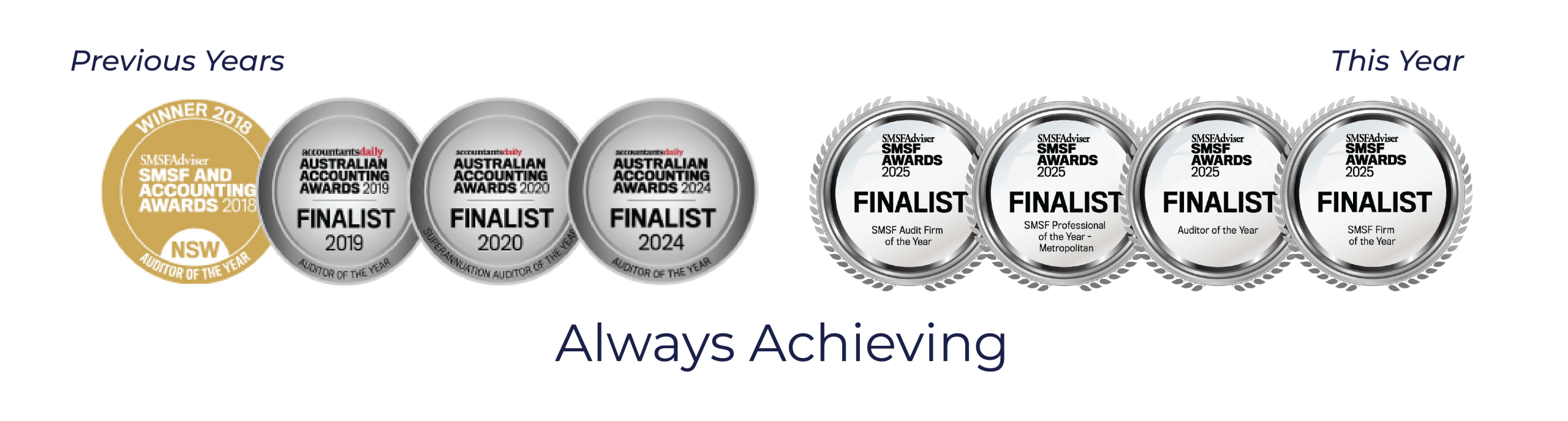
At this 2025 SMSF Adviser Awards, Saul SMSF has been recognised across four categories:
SMSF Auditor of the Year
SMSF Professional of the Year
SMSF Audit Firm of the Year
SMSF Firm of the Year
This recognition is not just about one individual, but about the collective strength, integrity and reliability that our team, clients and professional friends demonstrate every day.
At Saul SMSF, we have always believed that independence, integrity, great communication set the benchmark for what SMSF audit should be.
Our commitment is to protect trustees, uphold uncompromising standards and stand as thought leaders in an industry that continues to evolve.
These awards remind us why we do what we do: not to chase recognition, but to deliver audits that matter—audits that safeguard trustees, protect our referral partners’ brands and strengthen the SMSF sector for the future.
Our recent SMSF 2030 event (31 July 2025) was one example of how we lean into the future, exploring how technology, independence and new thinking will shape the next generation of SMSFs.
A heartfelt thank you to our incredible team for their dedication, to our valued clients and professional partners for their trust, and to our friends of Saul SMSF for their encouragement and support along the way.
We are proud to stand at the forefront of this profession, and even prouder to walk the path with all of you.
Not All Auditors Are Created Equal — Here’s What Top Firms Look for Under Pressure
Is your SMSF team under pressure from every direction?
You’re not alone. Right now, many Australian accounting firms are facing a perfect storm:
- A shortage of skilled local staff
- High wage costs and employer obligations
- Increasing client expectations
- ATO lodgement pressure
- And SMSF auditors who are… slow, inflexible, and out of sync
In this kind of environment, it’s not just about delivering the job—it’s about protecting your brand, preserving your margins, and staying ahead of risk.
The Hidden Cost of the Wrong Audit Relationship
When your audit provider isn’t commercial, responsive, or communicative, it creates a ripple effect:
- Workflows stall
- Client service suffers
- Lodgements are delayed
- And your reputation is left exposed
And yet, too many firms are stuck with transactional auditors who don’t think strategically, act slowly, and offer no real support when issues arise.
That’s Why We Created SMSF ADVANCED
SMSF ADVANCED is Saul SMSF’s premium audit solution, purpose-built for accounting firms who value:
- Prioritisation of complex and high-value funds
- Direct access to senior audit specialists
- Responsiveness and commercial thinking
- Protection from ATO scrutiny and reputational risk
This is not an outsourced checkbox service. SMSF ADVANCED is a high-touch, high-trust audit solution that’s designed for firms like yours—where capability, clarity and timeliness are non-negotiable.
Why Mid-Tier & Top 4 Firms Choose SMSF ADVANCED
Technical Depth
Our auditors understand unlisted investments, complex structures and ATO scrutiny risks—and we engage commercially, not defensively.
Client-Aligned Thinking
We respect your relationship with your clients. We work with you—not around you.
Brand Protection
A clean audit doesn’t just meet compliance—it protects your standing with the ATO, and your standing in the market.
Proven Leadership
Led by David Saul, Saul SMSF recently passed the ATO’s Large SMSF Auditor Program review with a clean bill of health—an achievement few firms can claim.
What Our Partners Say
“We’ve completed all our SMSF tax returns and received every audit report on time—thanks to Saul SMSF’s guidance and support. Their team’s clarity, responsiveness and professionalism stood out.”
— Partner, National Accounting Firm
Ready to Elevate Your SMSF Audit Relationship?
SMSF ADVANCED isn’t for everyone—it’s for firms who are ready to raise the bar.
If you’re a partner or senior leader looking for an auditor who prioritises your business, protects your clients, and understands the pressure you’re under, we invite you to connect.
When One Trustee Dominates: The Gender Gap Risk
In many Self-Managed Superannuation Funds (SMSFs), a familiar but often unspoken dynamic plays out—one trustee takes the lead, while others, often spouses or siblings, remain passive. This imbalance may appear harmless in the day-to-day running of the fund, but from an auditor’s perspective, it can have devastating long-term consequences—particularly when the dominant trustee makes high-risk investment decisions without proper oversight or agreement from the other trustees.
As a specialist firm that audits many SMSFs each year, we’ve seen this pattern emerge time and again. One trustee makes the decisions—frequently around complex or illiquid investments such as leveraged real estate (LRBAs), private companies, unlisted trusts, cryptocurrency, or collectables. Meanwhile, the other trustee(s)—often women—remain in the background, uninvolved, unaware, and at risk.
The fundamental problem? All trustees share equal legal responsibility, regardless of who made the decision. The Superannuation Industry (Supervision) Act 1993 (SIS Act) and the ATO’s Trustee Declaration make this unequivocally clear. Every trustee must:
- Act in the best interests of all members;
- Exercise care, skill and diligence;
- Prepare and regularly review an appropriate investment strategy;
- Keep proper records and ensure all decisions are well documented;
- Be informed about fund investments, insurance and compliance obligations.
When trustees fail to uphold these duties, the consequences can be catastrophic—and disproportionately borne by the passive trustee with the lower balance. In many cases, this is a woman whose retirement security is tied to a fund she has little practical control over.
The Papadam Case: A Cautionary Tale
The Supreme Court case Jenifer Helen Papadam v Smidam Pty Limited serves as a sobering example. Here, a family-run SMSF descended into dysfunction, with years of missing financial statements, inadequate records, and no meeting minutes or up-to-date investment strategy. The trustees were in serious conflict, and the fund was ultimately placed into receivership.
Saul SMSF was appointed by the Court to audit the fund and formulate a rectification plan. Our finding was stark: the fund had failed to meet even the most basic trustee obligations. The lack of compliance and transparency obliterated any hope of a viable audit trail. The fund’s principal asset had to be sold, and the receiver’s fees ballooned to over $130,000, consuming much of the members’ retirement savings.
This wasn’t just poor administration—it was the result of trustees abdicating their legal responsibilities. It was also a vivid illustration of what happens when one trustee takes control and others stay silent.
The Gendered Impact
In our forensic audit experience, it’s not uncommon for the passive trustee to be a woman—often a wife, sister, or daughter—who has deferred to her spouse or male relative on financial matters. The gender super gap is already a national concern, and cases like these only widen it. When high-risk decisions go south, it’s often the member with the smaller balance who suffers most—and often, tragically, without ever knowing the risks were taken in the first place.
What Can We Do?
- Trustee Education is a Must, Not Merely Recommended
The ATO trustee declaration is critical—it outlines each trustee’s legal obligations in detail. Yet, far too often, new trustees are told simply to sign it without proper explanation or training. This must change. Education should be a non-negotiable requirement for all trustees. - All Trustees Must Be Actively Involved
Passive trustees cannot sit back and assume everything is being handled correctly. If you are a trustee—male or female—you must attend meetings, review the investment strategy, understand the fund’s investments, and ensure compliance with SIS regulations. - Ask Questions
Probe decision-making and look for patterns of dominance and disengagement. Why? Because understanding is protecting all members’ interests—especially the vulnerable or passive ones. - Professional Advice Is Not a Luxury
SMSFs investing in complex assets—property, LRBAs, private equity, crypto—require robust professional advice. If only one trustee is receiving and acting on that advice, the fund is exposed to risk—and so are its members.
In conclusion, if you’re an SMSF trustee—regardless of whether you hold 90% or 9% of the balance—you are equally liable. The consequences of inaction, ignorance, or deference can be severe. The Papadam case shows what’s at stake. SMSFs can be powerful vehicles for wealth, but only when all trustees lean in and take responsibility.
This is not just about compliance—it’s about fairness, accountability, and closing the gender gap in retirement outcomes.
David Saul is the CEO & Managing Director of Saul SMSF, a specialist independent SMSF audit firm. He has served as a court-appointed auditor in multiple complex SMSF matters and is a founding council member of the SMSF Innovation Council.
When Your Auditor Slows You Down, It’s Time for a Smarter Option
Are you struggling to stay competitive while managing escalating costs, staffing gaps, and inflexible SMSF auditors? You’re not alone—and Saul SMSF has developed a streamlined solution to meet the moment.
The Reality for Australian SMSF Accountants Today
The landscape has shifted. Accounting and SMSF admin firms are facing:
- A critical shortage of qualified, reliable Australian staff
- High wage costs and burdensome employer obligations
- Increasing price pressure from clients
- Constant ATO compliance deadlines
- And worst of all—slow, inflexible auditors who don’t communicate or support you commercially
At the same time, clients still expect high service, fast delivery, and full compliance. It’s no wonder many firms are feeling the pressure on margins and morale.
The Real Cost of Inefficiency and Inflexibility
When your SMSF audits are delayed, you don’t just miss a deadline—you risk client relationships, internal workflows, and staff burnout. And when auditors aren’t responsive or adaptable, the burden falls back on your team.
In this environment, you need an audit partner who not only understands your pressures—but works to lighten your load.
SMSF Essentials: Built for Volume, Built for You
At Saul SMSF, we understand the demands of high-volume, price-sensitive firms. That’s why we created SMSF Essentials—an affordable, dependable audit solution starting from just $300 + GST per fund.
Here’s what you get:
- Streamlined audit process for high volumes
- Fast turnaround—no chasing
- Clear communication at every stage
- Reliable compliance with zero shortcuts
- Experienced Australian auditors—not bots, not juniors
- Real people who know your pain points—and solve them
Our SMSF Essentials service is designed to help you deliver consistent results while protecting your brand and profitability.
Trusted by Leading Australian Firms
Firms across Australia are turning to Saul SMSF because we’re easy to work with, technically solid, and above all—commercially focused. We don’t just audit—we partner with you.
Ready to Streamline Your SMSF Audits?
If your firm is under pressure to do more with less, we invite you to discover the difference with SMSF Essentials.
