

Superannuation – Has the Bargain Changed?
03 Aug, 26
Superannuation – Has the Bargain Changed?
I have just returned from two days at one of Australia’s leading SMSF technical conferences.
The agenda covered Division 296, family law splitting orders, transfer balance caps, valuations, estate planning and an ever-growing body of legislation surrounding self-managed superannuation.
As I listened to Australia’s leading technical minds, one question kept coming back to me.
Just how hard do Australians have to work to enjoy a well-earned retirement?
Not simply the decades spent building businesses, raising families and saving for the future—but the extraordinary complexity they must now navigate simply to preserve what they have earned.
That question took me back almost forty years.
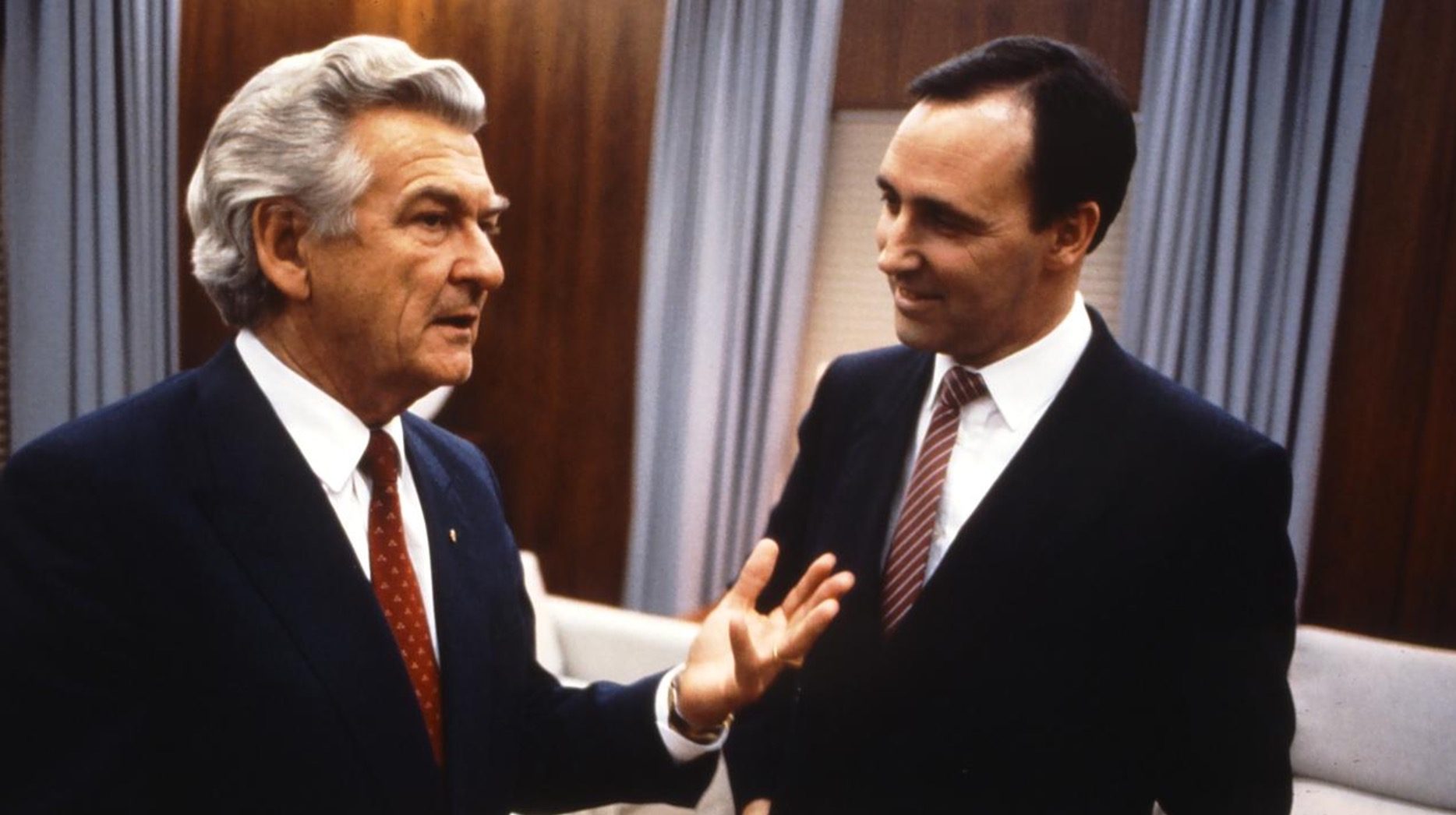
In 1988, as an 18-year-old country boy from Evans Head, I had the privilege of spending a morning fishing on Sydney Harbour with Prime Minister Bob Hawke and Peter Doyle aboard a 30-foot boat called Alice Eva.
What stayed with me wasn’t the fishing.
It was Bob Hawke’s genuine interest in a young Australian’s dreams. For several hours, the Prime Minister gave me his complete attention. I left believing I had met a leader who genuinely believed in ordinary Australians and their potential.
A few years later I was studying economics at the University of New England while Australia was undertaking some of the most significant economic reforms in its history. Under the Hawke and Keating Governments, compulsory superannuation was born.
Looking back, I don’t think we simply introduced a retirement savings system.
We made a bargain.
Work hard.
Save consistently.
Lock your savings away until retirement.
Take responsibility for your own future.
In return, Australia would encourage that behaviour through a stable, concessional superannuation system that rewarded self-reliance and reduced dependence on the Age Pension.
It was a distinctly Australian idea.
For almost twenty years, I have had the privilege of auditing thousands of self-managed superannuation funds.
Behind every fund is a lifetime of sacrifice.
The family who mortgaged everything to build a business.
The farmer who endured drought.
The tradie who worked weekends.
The professional who delayed gratification for decades.
These aren’t tax structures.
They are people’s lives.
Every reform may have its own policy rationale. But viewed together, the system has become increasingly complex.
Division 296 is another layer.
Family law, transfer balance caps, contribution limits, pensions, valuations and ever-expanding compliance obligations all add to the burden.
Then came the proposal to tax unrealised gains.
Whether that proposal re-emerges or not, I couldn’t help but wonder whether something more fundamental is changing.
Are private retirement savings still viewed primarily as an individual’s provision for retirement?
Or are they increasingly being seen as a national resource?
That is not a political question.
It is a question of trust.
Australians accepted compulsory superannuation because they believed in a long-term bargain. They accepted preserving part of every pay packet because they believed the rules would remain fundamentally stable and that those who accepted responsibility for their own retirement would continue to be encouraged to do so.
Confidence takes decades to build.
It can be weakened much more quickly.
As an SMSF auditor, I don’t just see balance sheets.
I see forty years of hard work.
I see sacrifice.
I see responsibility.
And I find myself asking a question that reaches well beyond Division 296.
Has the bargain changed?
David Saul – CEO & Managing Director – Saul SMSF
